In a detached house, a clog usually shows up in the fixture that caused it. In an attached home, it can show up in the neighbor's tub first. According to the Census Bureau's American Community Survey, about 15,700 of Brandon's 48,900 housing units, roughly one in three, are in buildings of five or more units. This post is about the drain lines in townhomes, condos, duplexes and small owner-run buildings, and how a single stoppage travels.

How a Stack Moves One Clog to Many Units
Fixtures on upper floors drain into a vertical pipe called a stack. Branch lines from each unit's kitchen, bath and laundry join it. At the base, the stack turns into a building drain that runs out to the lateral and the street. Anything that narrows the pipe at the bottom or partway down makes every connection above it drain slowly.
The water does not go back up the stack. It goes out the lowest opening, which is the ground-floor tub, shower or floor drain. That is why the first complaint often comes from the unit that did nothing wrong. The household that poured the grease may be two floors up and have no symptoms at all.
Townhome Rows Are a Different Layout
A townhome row has no stack in the apartment sense, but neighbors can still share pipe. Depending on how the row was plumbed, two or more units may feed one building drain or one lateral toward the street. Not every row does, and the plat and the original drawings decide it, not the age of the building. If your association has an as-built plumbing drawing, ask for a copy. If it does not, a camera run from the cleanout shows where the lines meet.
Three Clues That the Problem Is Past Your Own Unit
- Two fixtures in different rooms are slow together. A bathroom sink and the kitchen sink rarely clog at once unless they share a downstream pipe.
- You hear gurgling when a neighbor runs water. Air is being pushed back through traps by flow that has nowhere to go.
- A cable clears it, then it returns within days. The cable punched a hole through the blockage but left the grease coating, which is the same pattern that makes hydro jetting a better fit than a repeat snaking visit.
Why Grease and Wipes Cause Most of It
Hillsborough County's Don't Flush It guidance says baby wipes may be labeled flushable but are not, and that crews find such clogs at least twice a day. Its grease advice is to scrape pans, let fat cool, put it in a lidded container and put food scraps that contain grease in the trash even if you have a disposal. In a shared line the arithmetic gets worse, because several kitchens feed one pipe and each pours a little. The film builds faster than it would in a single house.
What a Visit Looks Like
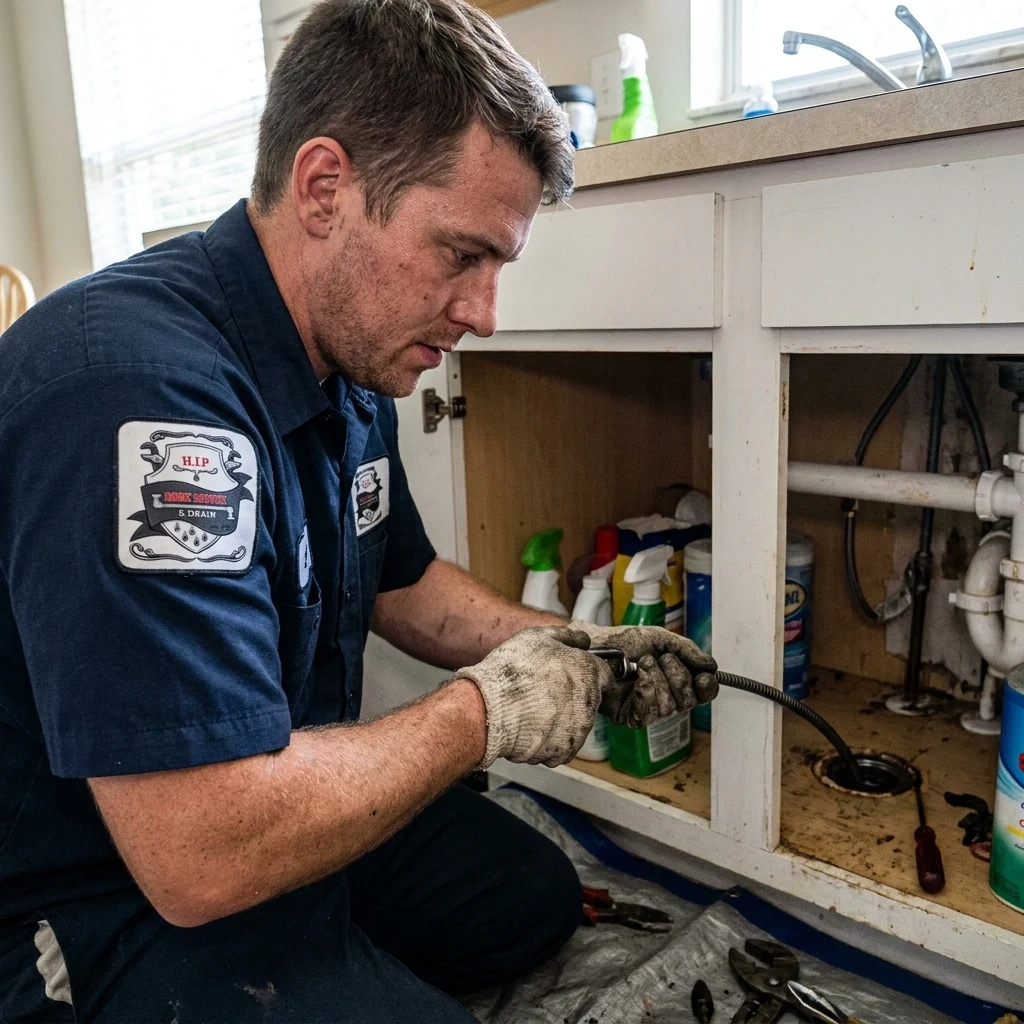
We start by asking which fixtures are affected and on which floors, then find the nearest cleanout outside the building. A cable can open the line quickly. If the line has clogged before, hydro jetting from the cleanout scours the building drain and the lower part of the stack, while a kitchen line jetting visit targets the grease where it begins. Rough prices from our standard list: branch-line snake run $175 to $325, kitchen line hydro jetting $275 to $450, and standard residential hydro jetting $350 to $650. We give a written price before starting.
We work on residential drain lines for homeowners and for owners of residential rentals and small buildings. Who pays for a shared line is a question for owners, the association and the lease, and we do not try to settle that. We can provide camera footage and a written description of what we found so everyone is working from the same facts.
What Residents Can Do While Waiting
Tell the owner or the association in writing the same day, and list every unit you know is affected. Avoid forcing a cable through a shared line yourself, since you cannot see what is downstream. Skip chemical cleaners in a line that is backing up into other units. Keep water use on the lower floors to a minimum until the line is open, because anything you add comes out at the lowest point.
Where This Shows Up in Brandon
In the census tract around Kensington Estates, 827 of 1,768 housing units, about 47 percent, are in buildings of five or more units. Around Brandon Pointe and Lake Brandon the figure is about 35 percent. Those are tract-level numbers that cover more than one community, but they explain why shared lines are a regular part of drain work here. Our post on repeat backups in rentals and HOA communities covers how to document a recurring problem.
Several units slow at once?
Tell us which fixtures and which floors, and we will say whether to start at a cleanout or the kitchen line. Call or text for a same-day visit and a written price.
CALL 813-733-7188Shared drain line questions
Water leaves a stopped stack through the lowest opening, which is usually a ground-floor tub, shower or floor drain. The clog may have started with grease or wipes from a unit above. The lowest unit sees the symptom first even when it did not cause the blockage.
No. It depends on how that row was plumbed. Some units tie into a shared building drain or lateral, and others run separately to the street. A camera run from the cleanout, or the association's as-built drawings, shows where lines join.
A cable is a fair first move for a single stoppage. If the line has clogged before or the camera shows a grease coating, jetting from the cleanout cleans the pipe wall and usually lasts longer. We recommend the lighter option when the camera supports it.
If only one fixture is slow, the problem is probably in that fixture's branch line. If a neighbor has symptoms, if fixtures in different rooms slow together, or if you hear gurgling when others run water, suspect the shared drain.